
YOUNGTOWN BIRD REMOVAL
Birds Can Be a Nuisance – Where and What to Do! Bird Removal and Bird Control, in Youngtown, is a service that most do not think about until their problem with birds is moved beyond a nuisance to obnoxious. Southwest Avian Solutions provides optimal bird removal solutions for all types of bird problems. Need Birds […]
WADDELL BIRD REMOVAL
Birds Can Be a Nuisance – Where and What to Do! Bird Removal and Bird Control, in Waddell, is a service that most do not think about until their problem with birds is moved beyond a nuisance to obnoxious. Southwest Avian Solutions provides optimal bird removal solutions for all types of bird problems. Need Birds […]
TOLLESON BIRD REMOVAL
Birds Can Be a Nuisance – Where and What to Do! Bird Removal and Bird Control, in Tolleson, is a service that most do not think about until their problem with birds is moved beyond a nuisance to obnoxious. Southwest Avian Solutions provides optimal bird removal solutions for all types of bird problems. Need Birds […]
SUN CITY BIRD REMOVAL
Birds Can Be a Nuisance – Where and What to Do! Bird Removal and Bird Control, in Sun City, is a service that most do not think about until their problem with birds is moved beyond a nuisance to obnoxious. Southwest Avian Solutions provides optimal bird removal solutions for all types of bird problems. Need […]
GOLD CANYON BIRD REMOVAL
Birds Can Be a Nuisance – Where and What to Do! Bird Removal and Bird Control, in Gold Canyon, is a service that most do not think about until their problem with birds is moved beyond a nuisance to obnoxious. Southwest Avian Solutions provides optimal bird removal solutions for all types of bird problems. Need […]
GILBERT BIRD REMOVAL
Birds Can Be a Nuisance – Where and What to Do! Bird Removal and Bird Control, in Gilbert, is a service that most do not think about until their problem with birds is moved beyond a nuisance to obnoxious. Southwest Avian Solutions provides optimal bird removal solutions for all types of bird problems. Need Birds […]
BIRD PEST CONTROL AVONDALE
Strategic Avian Management: Safeguarding Avondale’s Urban Spaces from Bird-Related Hazards Avondale, Arizona, a jewel in the Sonoran Desert, is renowned for its breathtaking landscapes and rich biodiversity. Among its diverse wildlife, Avondale boasts a unique array of bird species, from the vibrant hummingbirds to the majestic raptors. While these birds are a testament to the […]
BIRD PEST CONTROL SUN CITY
Strategic Avian Management: Safeguarding Sun City’s Urban Spaces from Bird-Related Hazards Sun City, Arizona, a jewel in the Sonoran Desert, is renowned for its breathtaking landscapes and rich biodiversity. Among its diverse wildlife, Sun City boasts a unique array of bird species, from the vibrant hummingbirds to the majestic raptors. While these birds are a […]
SOUTHWEST AVIAN SOLUTIONS: THE BEST BIRD DETERRENT COMPANY IN PEORIA, AZ
Don’t Let Birds Ruin Your Apache JunctionArea Business! Choose Southwest Avian Solutions As the fifth-largest city in the United States, Peoria, AZ, is home to various businesses, ranging from small start-ups to large corporations. While some of these businesses thrive without any issues, others face problems with birds. Birds can cause significant problems for businesses, […]
SOUTHWEST AVIAN SOLUTIONS: THE BEST BIRD DETERRENT COMPANY IN EL MIRAGE, AZ
Don’t Let Birds Ruin Your El Mirage Area Business! Choose Southwest Avian Solutions As the fifth-largest city in the United States, El Mirage, AZ, is home to various businesses, ranging from small start-ups to large corporations. While some of these businesses thrive without any issues, others face problems with birds. Birds can cause significant problems […]

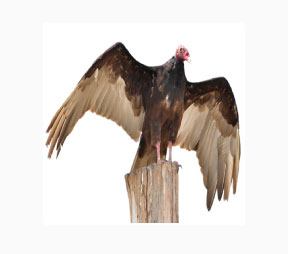 The Turkey Vulture does not win any beauty contests. The birds’ shape and head look similar to a turkey, with a red head and dark body feathers.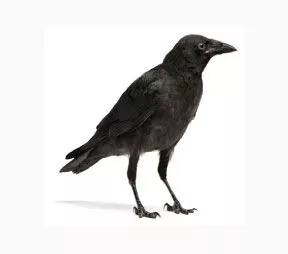
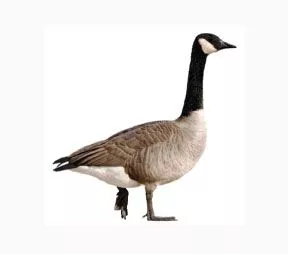 By definition, Canadian Geese are not classified as pest birds and are afforded protection by federal and state agencies. Nonetheless, Canadian Geese are increasingly becoming the scourge of suburbia as their numbers have grown in the past decade from only a few thousand to hundreds of thousands of these birds.
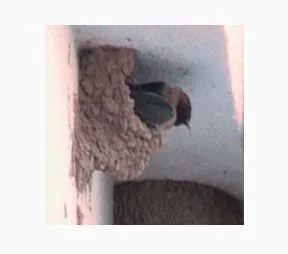 These sleek little birds are well known for their long migration and nesting habits. Cliff and Barn Swallows spend their winters in South America and summers in North America. They arrive around March in the southern part of the country, reaching the northern states in April. Swallows are very territorial and will always come back to the same nesting site. Swallows have made a very successful switch from cliffs and caves to man made structures for placement of their mud pellet nests.
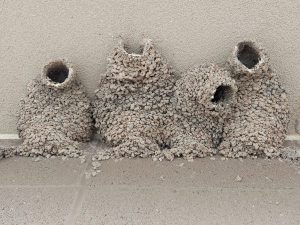 from the bird colony along with collecting on the ground. Homeowners have also reported problems with parasites entering the house through building cracks next to the nests which poses a potential health risk to humans and animals.
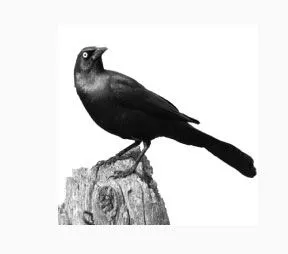 Grackles are boisterous, abundant members of the Troupial Family. The common grackle has a green,blue, or purple iridescent tinted black plumage with a glossy purplish head, neck, and breast with the female of the species, slightly smaller and duller colored.
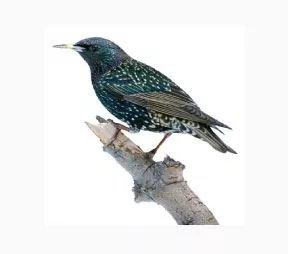 Like the House Sparrow, the Starling was introduced from Europe in the 19th century. However, it did not spread as fast and only reached the western coast within the last few decades.
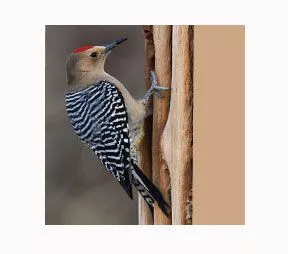 Woodpeckers primarily feed on wood-boring insects using their strong beak and long tongue to dislodge food. Some members of the Woodpecker Family (Flickers) feed on insects of the ground, while others prefer native berries, fruits, and nuts.
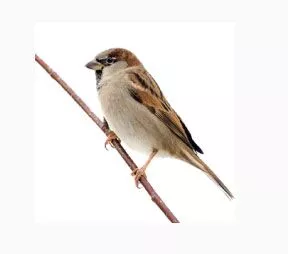 The House Sparrow is the number two urban pest bird. Introduced as a species to North America, the house sparrow quickly spread across the country due to its lack of natural enemies and its adaptive traits. Its ability to nest in urban structures, eat urban scraps, and a large breeding capacity are some of these adaptive traits.
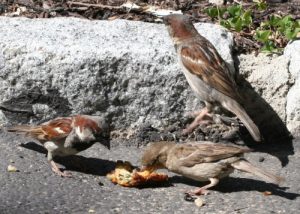 eaves of houses.
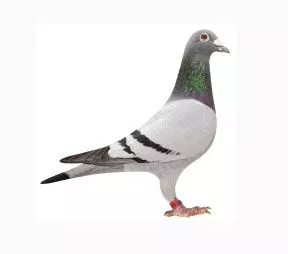 Feral Pigeons (Columbia Livia) are the number one urban pest bird, causing damage where ever they nest or roost. Pigeons are descendants of domesticated European Homing Pigeons or Rock Doves, so they have a varied diet and feel at ease making their homes in man-made structures, they also lay 2 – 3 eggs every 3 or 4 months all year long in Arizona.
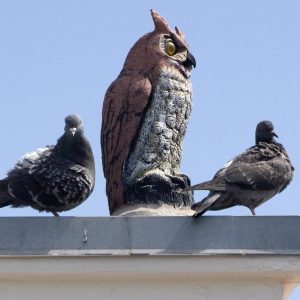 units, roof line overhangs, solar panels or even wide window sills.