
Let our team clean out the mess under your solar panels and then pigeon proof around your solar panels to prevent the mess pigeons make on your roof top.

Solar Panel Pigeon Proofing – stops the mess !
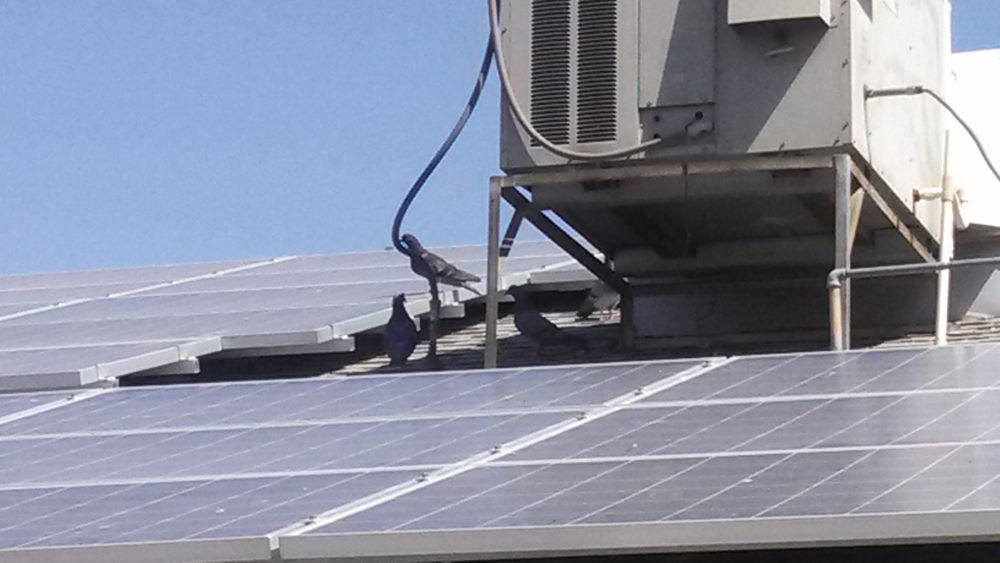
Pigeons have been using residential roof tops, gutters, roof overhangs, and even the protected window trim to build their nests on or roost on for a long time.

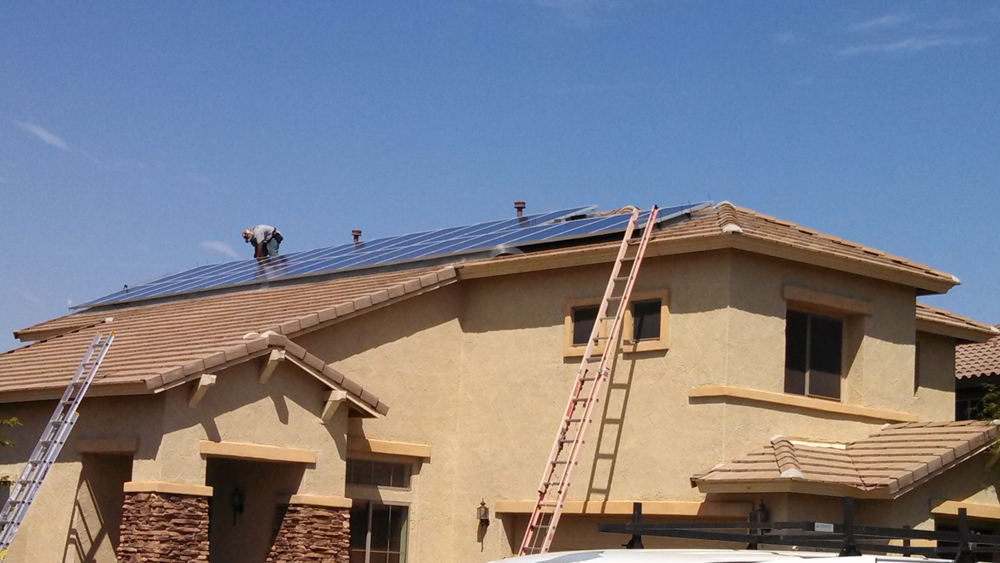
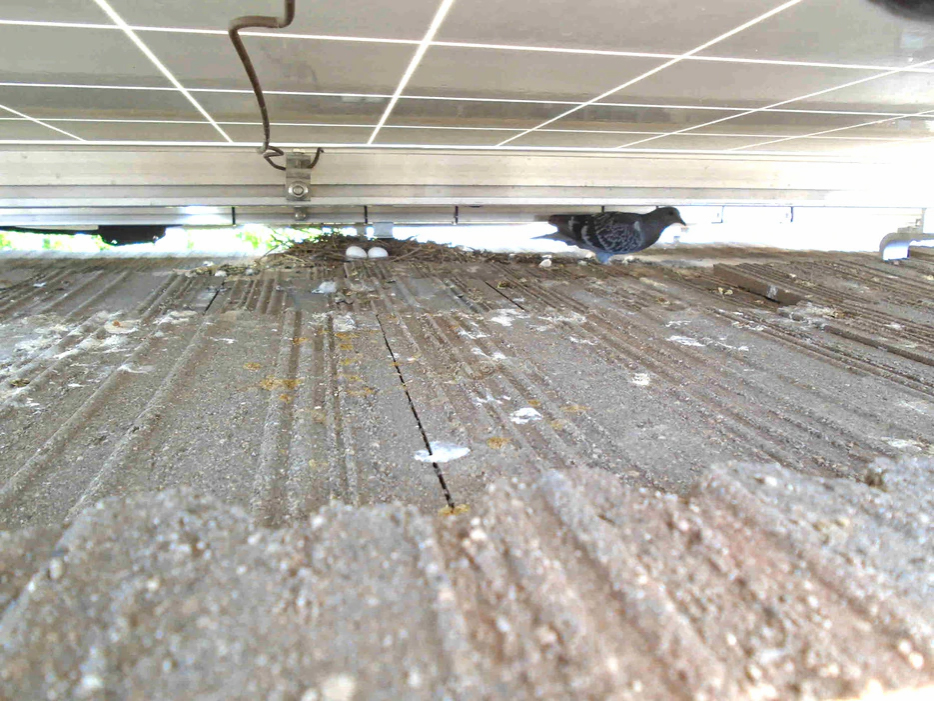
Since the arrival of solar panels on roof tops in Phoenix and the rest of Arizona, we have now literally put a huge roof over the pigeons’ favorite nesting spot… YOUR ROOF.
Solar panels give pigeons protection from Arizona’s scorching summer heat and shelter from all the elements and predators.
Commercial solar panels with a problems Roof top solar panels have created the perfect home for pigeons, which is why many cities are now requiring solar panel pigeon screening be attached when installing solar panels to prevent huge pigeon population buildups.
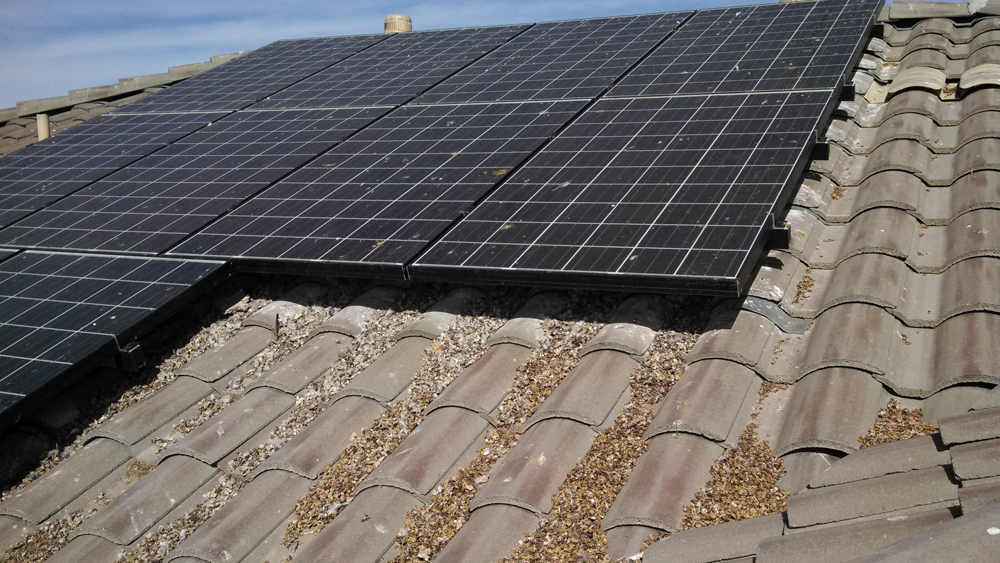
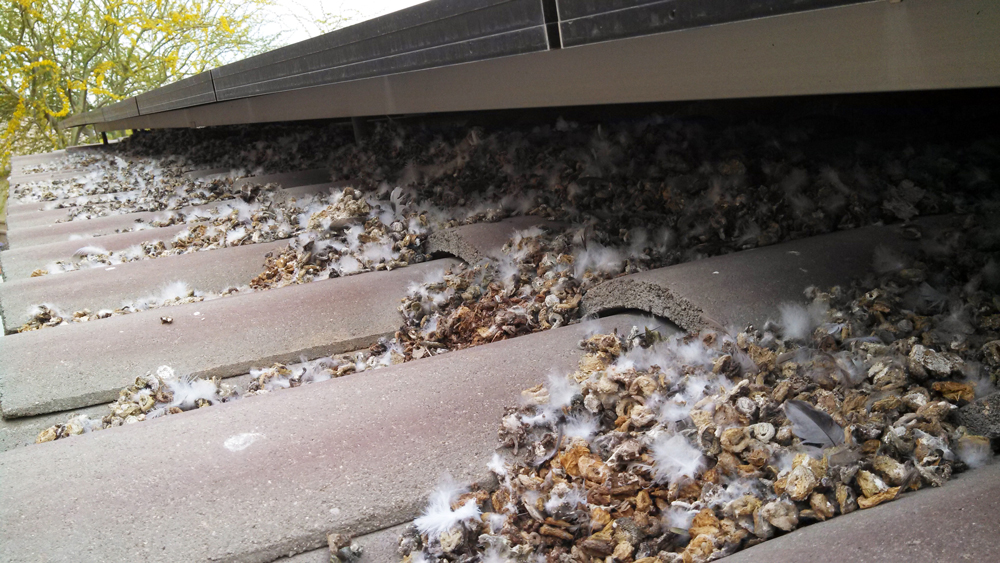
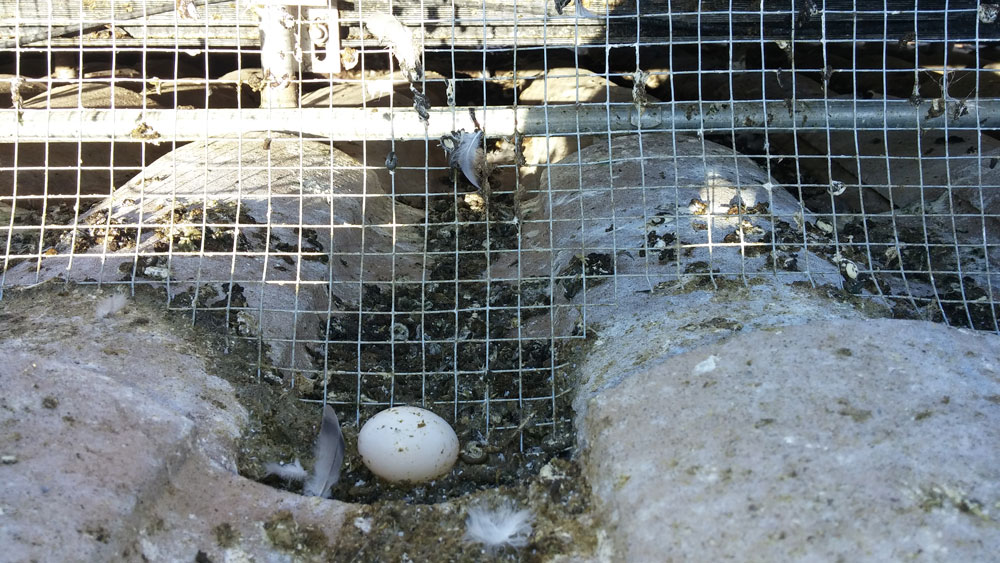
Pigeon feces and nesting materials build up under the solar panels, eating away at your tile roof and possibly backing up water when it rains forcing water under the tile roof and onto your interior ceiling below.
We always clean out the nests and pigeon waste from under your solar panels.

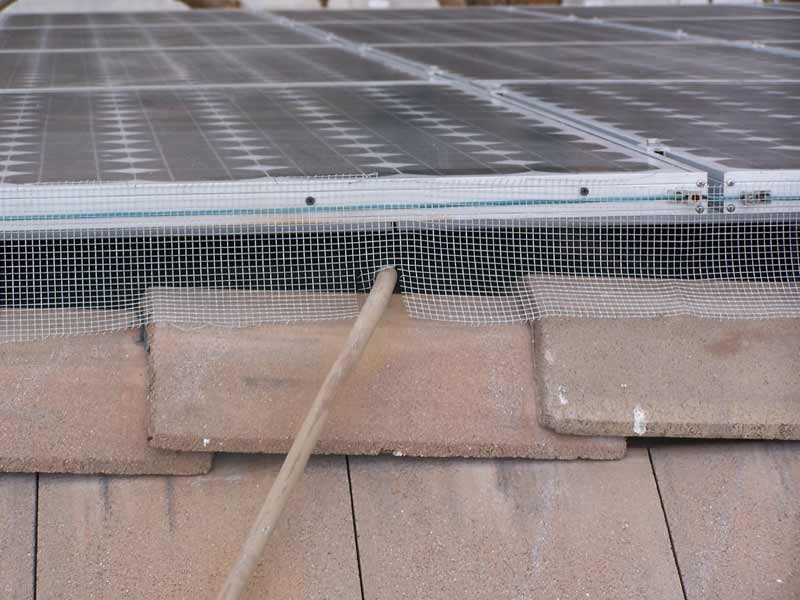
Pigeon nests and other debris is removed as best we can from under the solar panels using our long pole removal tools and other devices. All debris is bagged and taken away.
Then we use a 2500 psi pressure washer to clean under the solar panel arrays and a disinfectant is sprayed to ensure that none of the over 60 diseases and over 40 parasites carried by pigeons and pest bird remain on your home
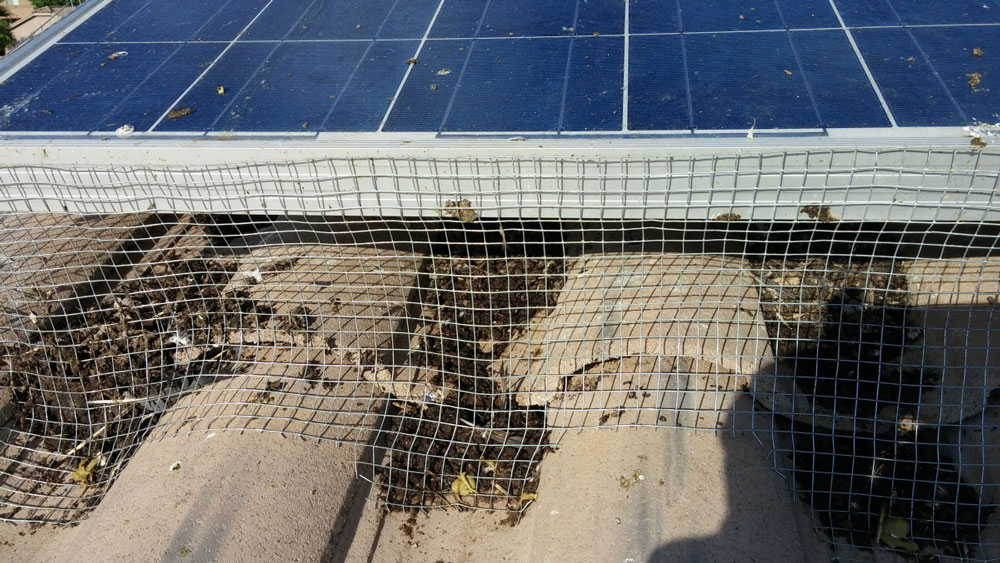
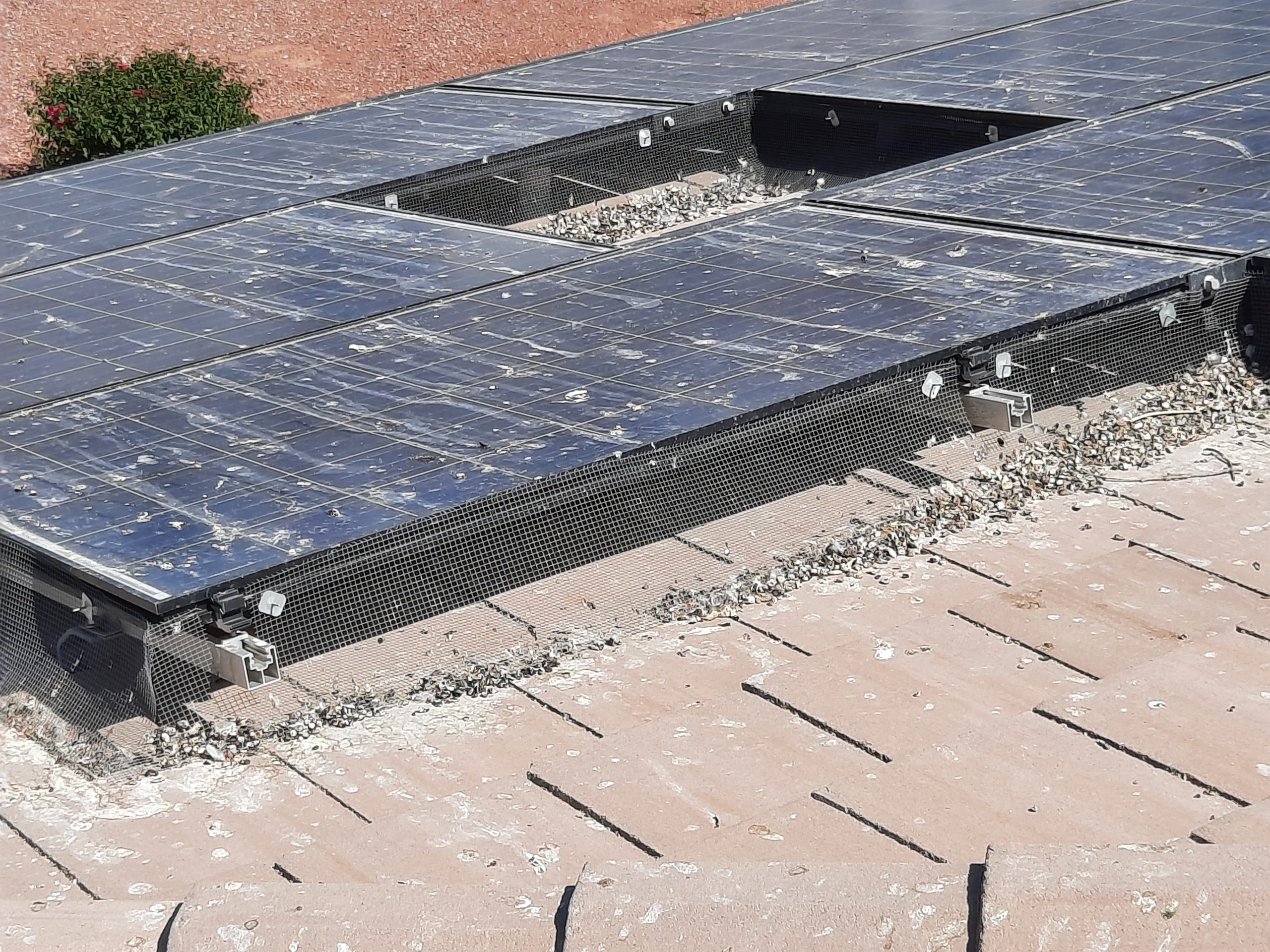
We always need to clean up the solar panels, some companies don’t and this is the nasty, smelly result.
Many companies in Phoenix, Arizona cut corners by only cleaning up the pigeon waste around the sides of the panels and then use your garden hose to wash off the just areas that can be seen from the ground. This is part of the reason, and the problem, why some companies are so cheap. Quality of service, and your health, actually matters to us.
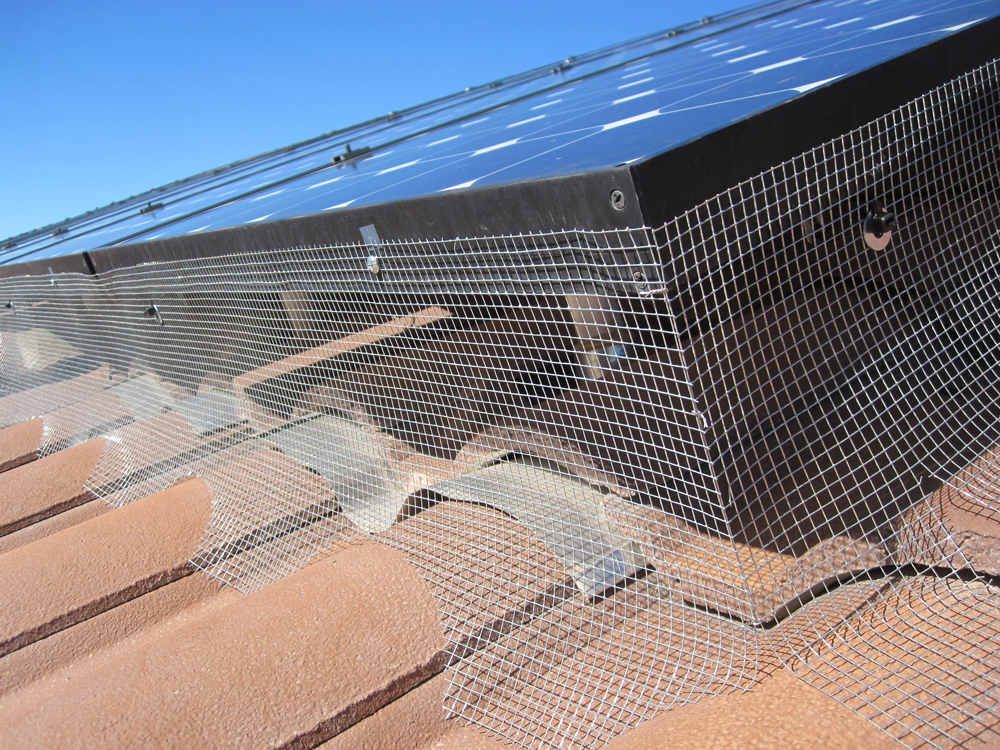
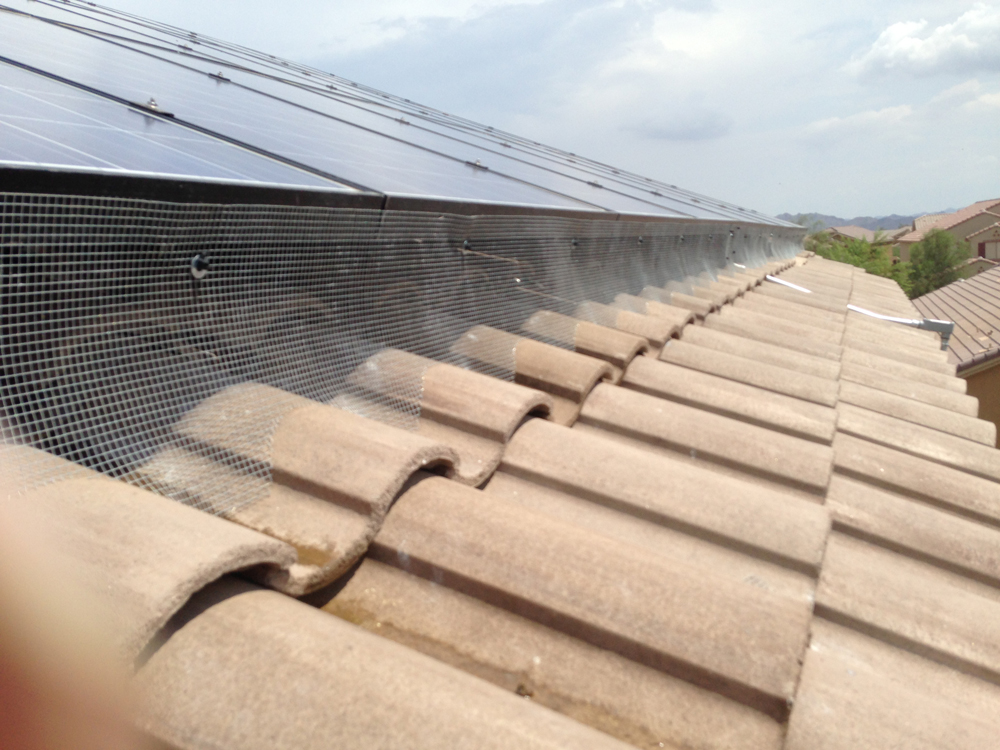
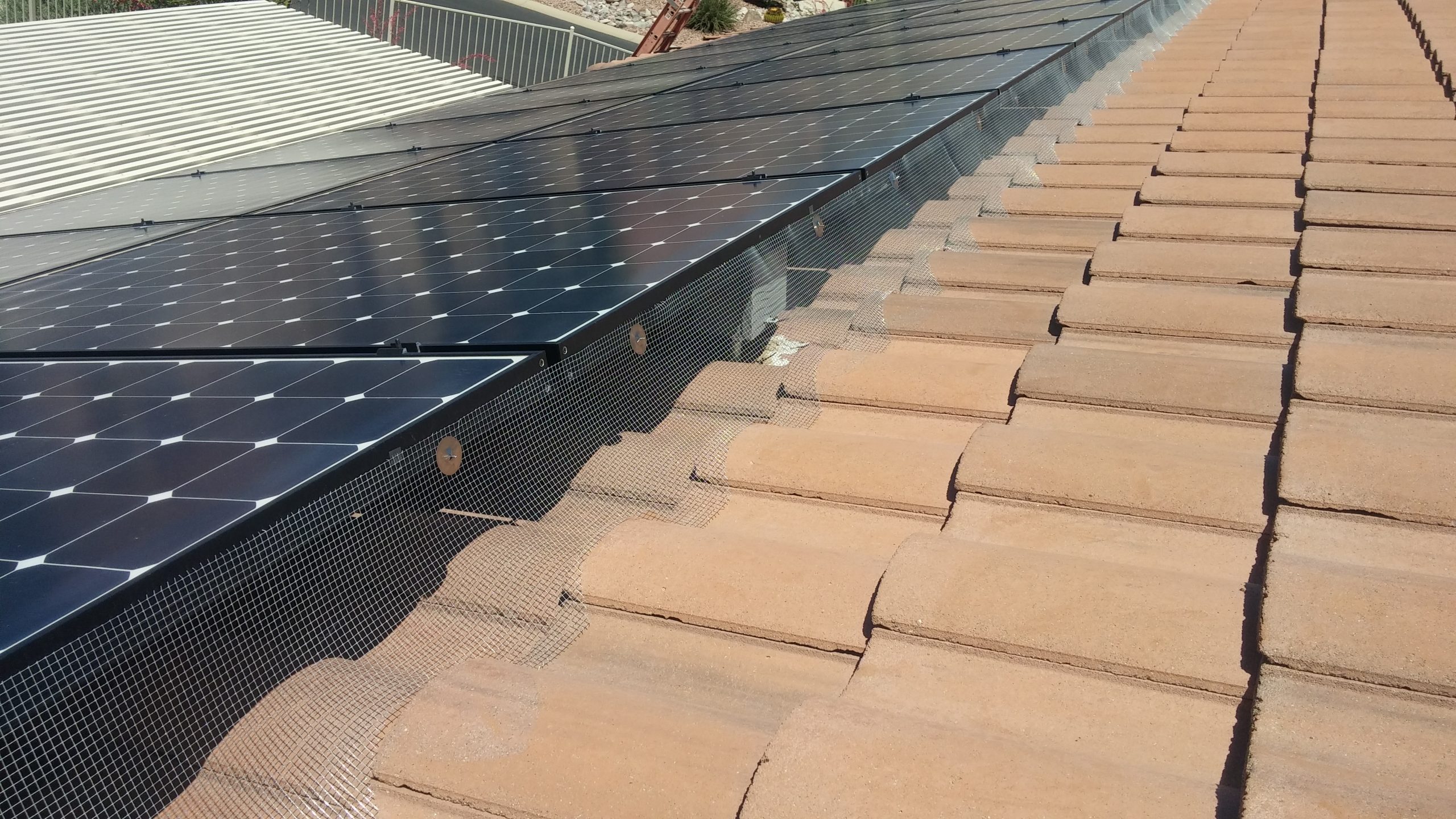
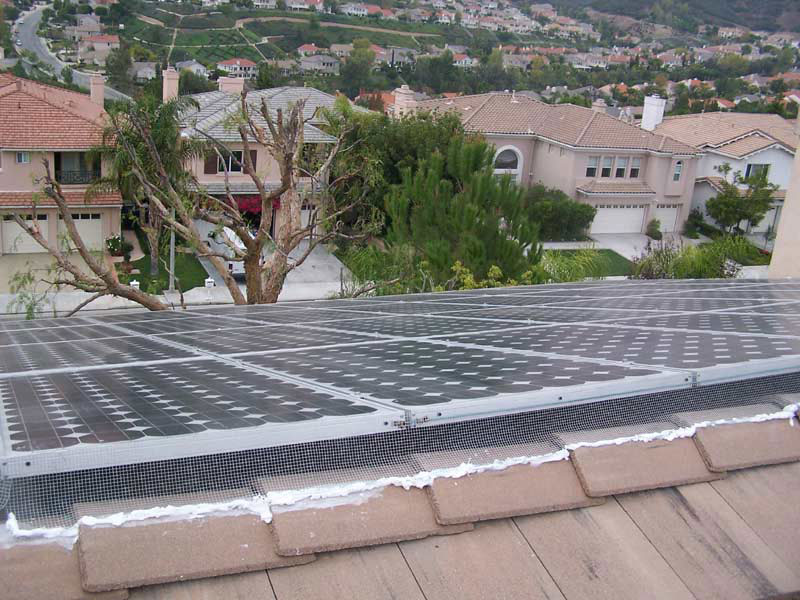
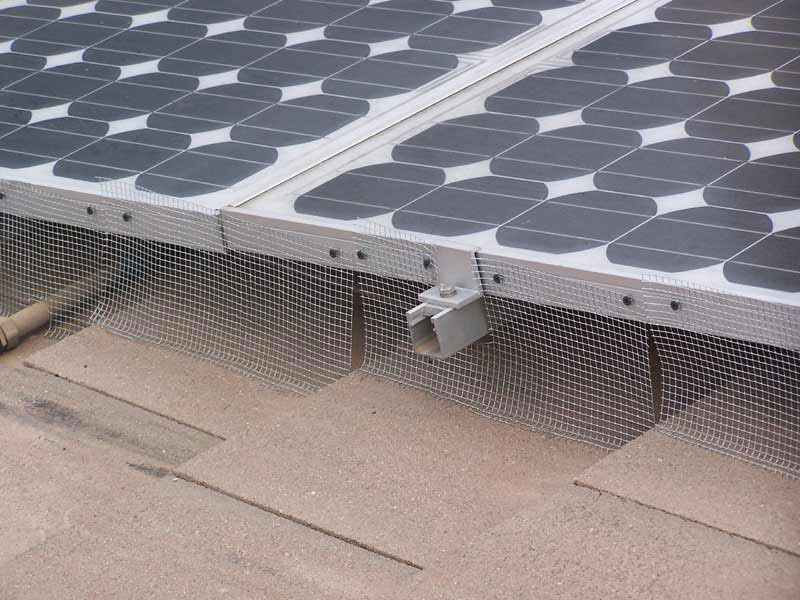
After the cleaning has been done we then install the pigeon proof solar panel screen. We ensure no damage occurs to your solar panels by using a unique solar panel attachment system that is custom fit to your solar panels and roof.
Solar panel pigeon protection stops pigeons from nesting under your solar panels with a guaranteed Pigeon Proofing solar panel system.
Over the years, Southwest Avian Solutions has developed a long lasting, guaranteed solution for bird proofing solar panels. We use a discreet, long lasting, galvanized wire mesh that has a 100% success rate at stopping pigeons from getting under solar panel arrays. Our system is implemented without screwing into the solar panel framework or support structure, so your solar panel warranty will not be voided. Many other bird control companies do not take that into consideration and put screws directly in the frames. We also do not put pigeon control netting over the panels and roof top because that creates fall hazards for workers on your rooftop and may trap the pigeons.
Some solar panel installation companies are now recommending Southwest Avian Solutions to their customers as their preferred solar panel bird proofing specialists. After seeing our Quality and workmanship compared to many of the other companies out there that are attempting solar panel screening, it was a no-brainer.
With more than 18 years of pigeon control experience and expertise in bird proofing solar panels, and the use of our non-damaging attachment system, we are Arizona’s residential and commercial solar panel pigeon proofing experts.
Contact us today for your peace of mind and long term protection! Our solar panel pigeon protection screening and bird proofing experts are always happy to talk to you about installing pigeon and bird proofing solar panel screening on your solar panels.

Bird Proofing Solar Panel Screening services are covered by our exclusive Bird Free Guarantee.
Call Now for a Free Inspection, Stop The Unhealthy Mess





 The Turkey Vulture does not win any beauty contests. The birds’ shape and head look similar to a turkey, with a red head and dark body feathers.
 eaves of houses.
 units, roof line overhangs, solar panels or even wide window sills.